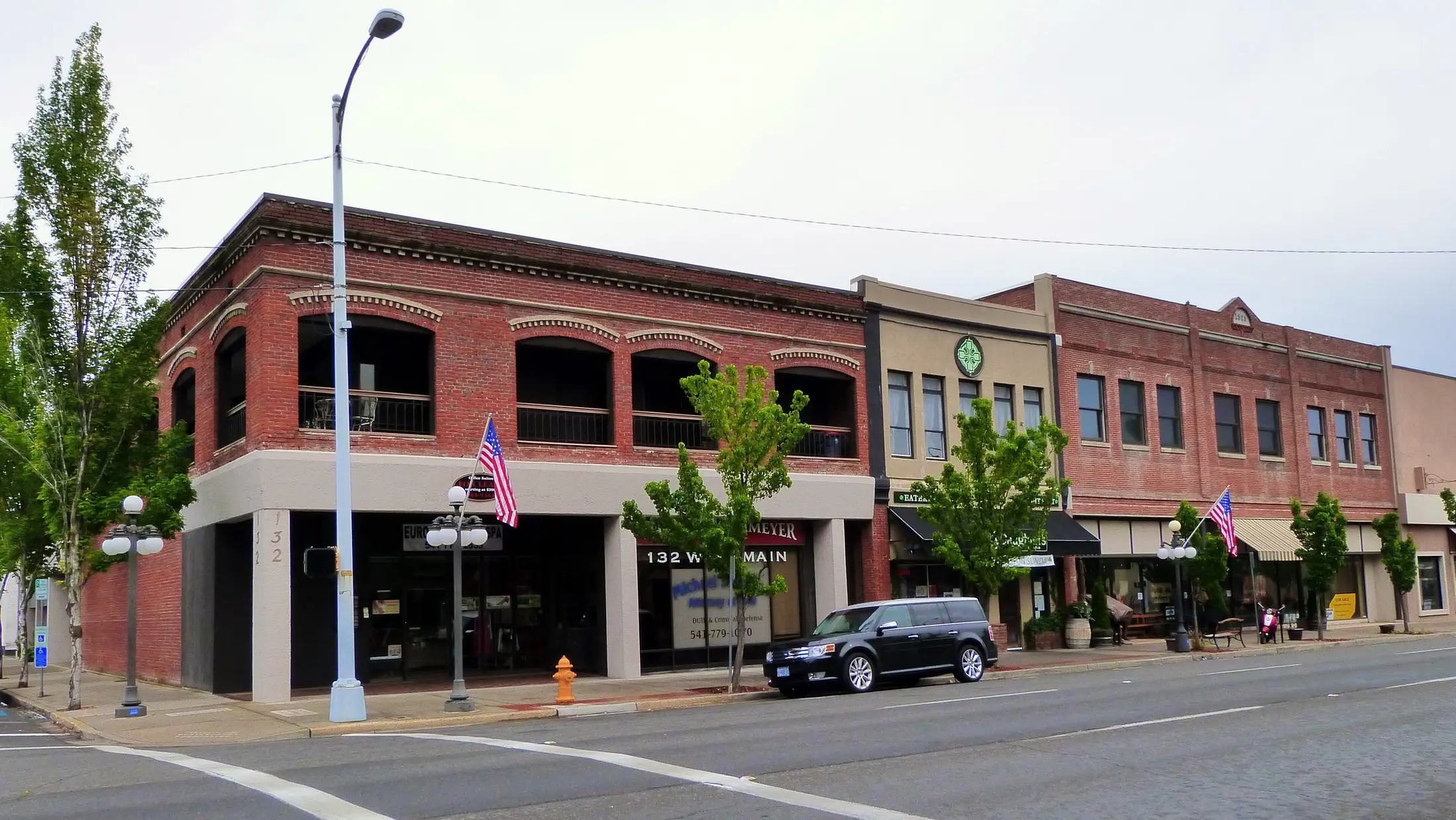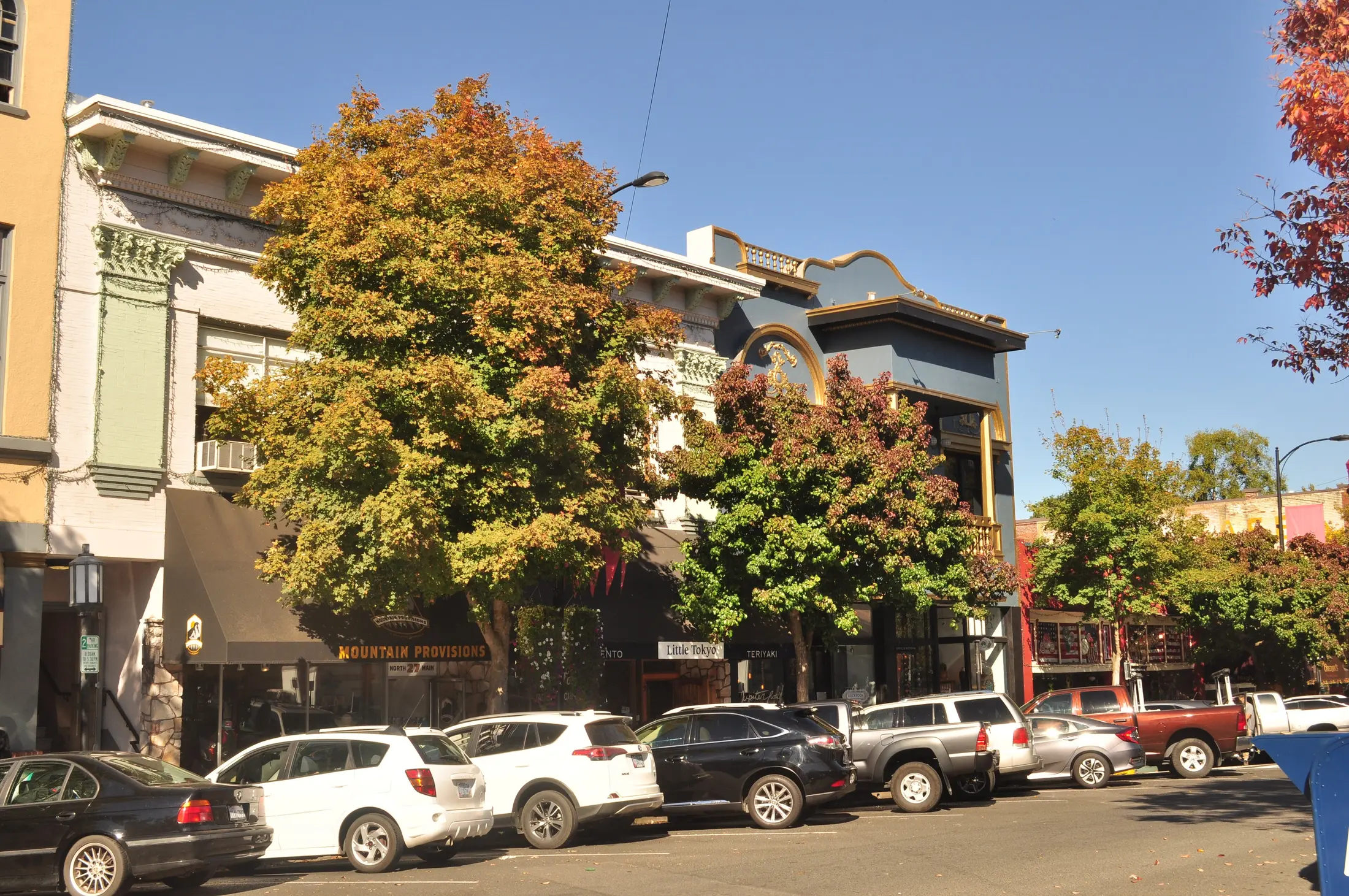
Ashland at a glance
- Before 1850Shasta people live in the southern Bear Creek Valley.
- 1850sSettlers establish Ashland Mills beside the creek.
- 1890s–1920sChautauqua, Lithia Park and rail changes remake the town.
- 1935Angus Bowmer starts the Oregon Shakespeare Festival.
- 1970 onwardTheater and higher education help anchor a visitor economy.
Ashland Creek before Ashland Mills
Ashland occupies the southern Bear Creek Valley, where Ashland Creek descends toward the valley floor. The Oregon Encyclopedia locates the settler town on a Shasta village site. Shasta history belongs at the beginning of any account of the city, and the regional treaties, war and removal of the 1850s explain how settlers came to control the land.
Abel Helman’s sawmill and flouring mill beside the creek gave the early community its name, Ashland Mills. Farms and ranches developed nearby, while the road over the Siskiyous connected this part of the valley to California. The creek was a source of power and a place around which business and public life formed; today’s plaza and park still follow its course.
A regional center meets new competition
Stage travel and then the Southern Pacific line through the 1880s helped Ashland grow beyond a milling village. For a time it was larger and wealthier than the older mining center at Jacksonville. The Ashland Academy opened in 1872, beginning the institutional history of what became Southern Oregon University. The school reopened as a state normal school in 1926 and remains a major part of the city’s life.
The 1890s brought Chautauqua gatherings, mixing lectures and performances with a civic ambition to make Ashland a cultural destination. Yet growth was not uninterrupted. Medford’s rail and orchard boom overtook Ashland by 1910. In 1927 the railroad’s Natron Cut-off moved much through traffic away, and the Depression deepened the strain. The city’s later cultural identity developed partly in response to these economic turns.
Why Lithia Park looks the way it does
The park did not appear all at once. Chautauqua activity near the creek began in 1893, and voters set aside city land along the creek for a park in 1908. A 1914 bond backed a proposed mineral-springs resort and park improvements. The grand spa plan faltered, but the investment in landscape lasted. John McLaren, superintendent of San Francisco’s Golden Gate Park, helped shape the paths, water features and planting.
Lithia Park now connects the plaza with the canyon beyond it. Its preserved landscape shows how a town used public space to remake its image, not merely how it found a pretty creek. The Oregon Encyclopedia documents the park’s design and political history; the city’s current page has maps, rules and access information for a visit.
The stage, the university and who was welcomed
Angus Bowmer founded the Oregon Shakespeare Festival in 1935. The company expanded over decades, and its indoor Angus Bowmer Theatre opened in 1970. Together with the college and Lithia Park, the festival helped Ashland become a regional arts and visitor center. The city is more than its performances, but those institutions explain why its path differed from Medford’s timber and medical growth.
That attractive public story has exclusions. The Oregon Encyclopedia records early twentieth-century civic promotion that explicitly discouraged Black and Japanese residents. It should be read as evidence of discrimination, not as a quaint advertising detail. A fuller history asks whose labor, art and community work shaped Ashland, and whose opportunities were limited, alongside the familiar park and theater narrative.
Read the city on foot
Start at the plaza, follow Ashland Creek into Lithia Park, and notice how the old milling site became civic space. Then look toward the university and theater district as later chapters. For buildings, exhibits and current access, use the city, SOU and festival pages linked below; schedules and facilities change.
The regional history article explains the broader Rogue Valley story. The Ashland community guide covers current events and services, while the activity guide helps plan a day. Those answer different questions from this historical account.
Sources and further reading
These links lead to the historical institutions and local agencies used to check this account. Some sources cover the wider watershed; read them alongside the town specific sources.