Jacksonville at a glance
- 1851–56Gold draws settlers; treaties, war and removal devastate Native communities.
- Late 1800sMerchants, miners and families build a county trade center.
- 1880sThe railroad bypasses Jacksonville for the valley floor.
- 1963–66Britt concerts begin; the historic district receives national landmark status.
Before and during the gold rush
Jacksonville stands in the Rogue Valley homeland of Native peoples whose histories do not begin with a mining camp. Gold discoveries near the future town in the winter of 1851–52 drew miners, merchants and settlers. The rush also accelerated violence and loss of land. Treaties and the Rogue River War ended with forced removal of many Native people from southwestern Oregon. The historic storefronts make this era visible from one angle; the consequences for earlier communities are less visible in brick and wood.
The first camp quickly needed stores, lodging and people who could move goods between the mines and other towns. Jacksonville grew into a county trade center, drawing residents whose work was commercial or agricultural as well as mining. Its importance outlasted the first rush.
The people behind the preserved buildings
Peter Britt arrived in 1852 and became a photographer and horticulturist. His images help historians examine a nineteenth-century town, but the camera recorded only part of its population. Chinese miners and labor contractors were also part of southern Oregon’s economy. The Oregon Encyclopedia describes Gin Lin’s work with mining crews and hydraulic operations in the Siskiyous. Chinese contributions and the discrimination they faced complicate a simple pioneer story.
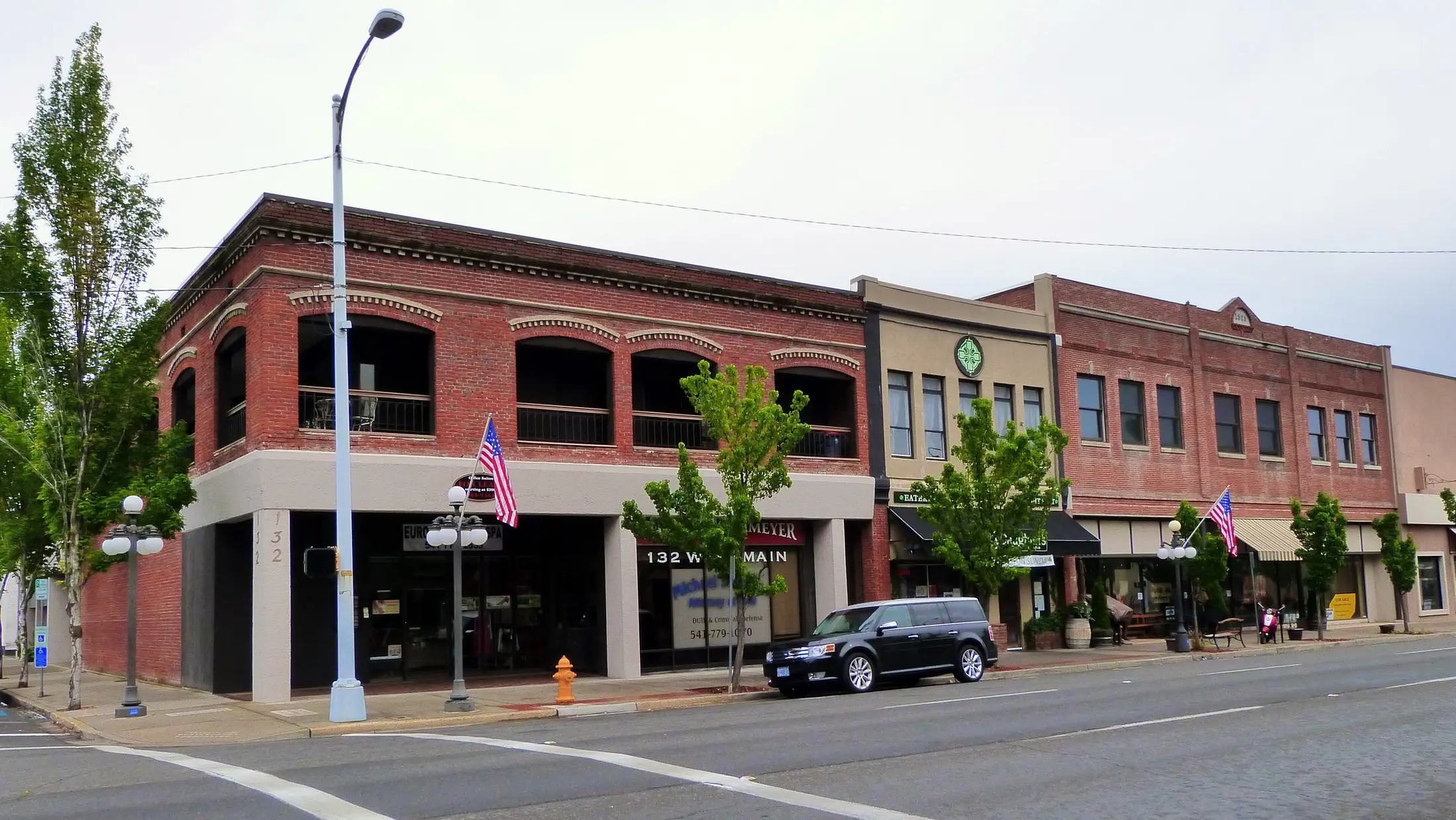
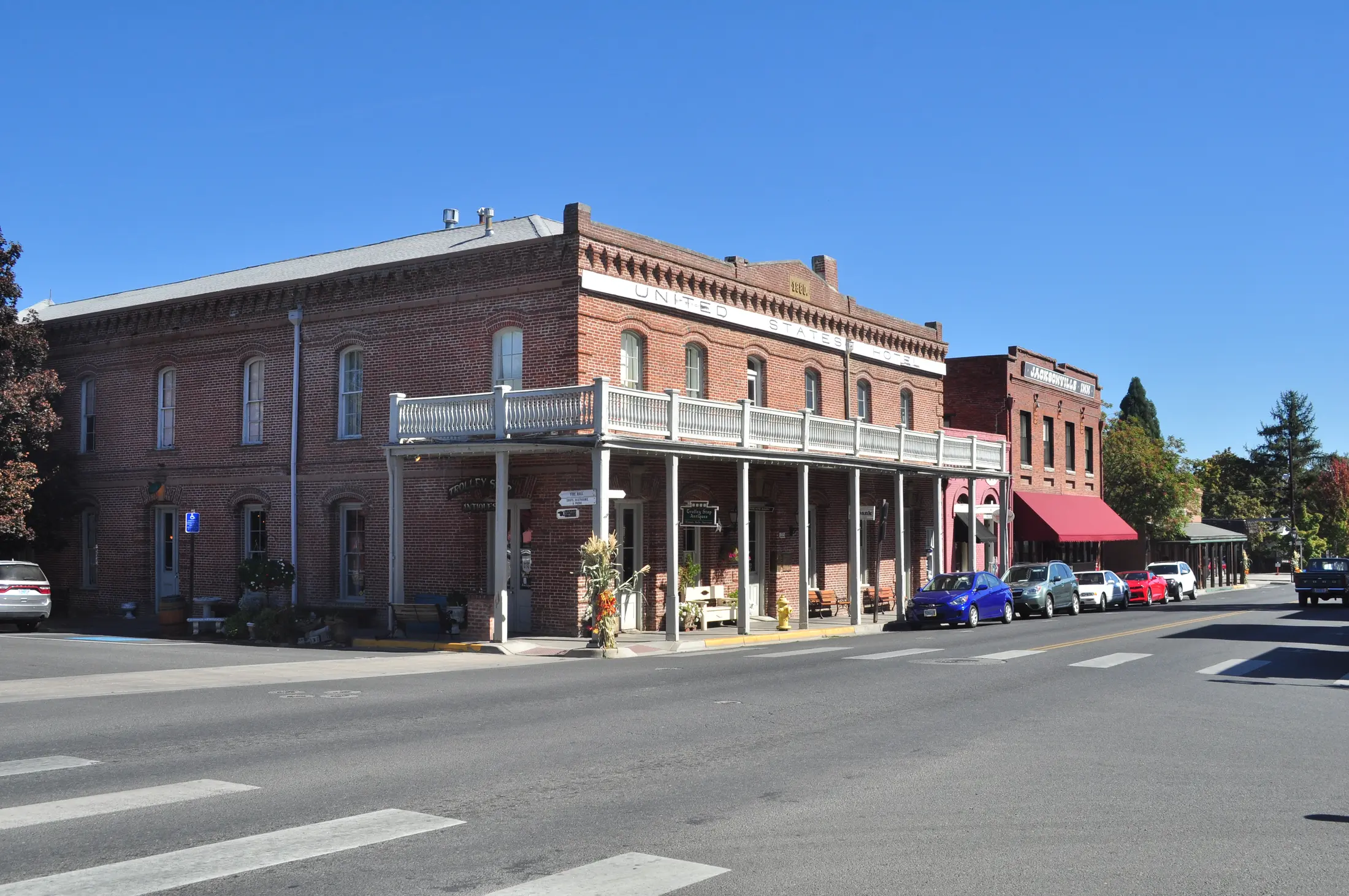
Old City Hall and the commercial blocks around Oregon, Main and California streets reveal a town of government, banking, shops and hotels. Their uses changed over time. A preserved façade tells us a building survived; it does not, by itself, tell us who worked inside or who could own property and participate in civic life.
Why the railroad changed the town’s role
In the 1880s the main line took a more direct course across the Bear Creek valley floor. Its depot gave Medford an advantage in shipping and growth while Jacksonville’s position as the older county seat no longer guaranteed regional commerce. As businesses followed faster transport, Jacksonville’s pace of redevelopment slowed. Medford later took over the county-seat role.
That economic setback had an unintended result: many nineteenth-century buildings survived. It would be misleading to say the whole town was frozen in time, but the surviving district allows visitors to trace a gold-rush commercial center more clearly than in most rapidly rebuilt towns.
Preservation and a living cultural town
Britt Music Festival began on Peter Britt’s former estate in 1963. In 1966 the Jacksonville Historic District gained National Historic Landmark designation. Local historical work helped protect buildings, gather photographs and interpret the community. Those acts of preservation were choices by later residents, not a natural result of the railroad bypass alone.
Today the town is both a protected historic place and a place where people live and work. Preservation must keep making room for fuller accounts of Native history, Chinese mining, labor, women’s work and the lives of ordinary families alongside its famous merchants and buildings.
Explore the record on a walk
Start on California Street, then turn toward Oregon and Main streets to see the old civic center. Historic Jacksonville’s virtual walking tour gives building-level stories, while the Southern Oregon Historical Society and Oregon Encyclopedia provide photographs and regional context. Check access and hours for any interior visit.
For a current outing or event, use the Jacksonville community guide. For the railroad’s effect on the nearby city it helped create, read Medford’s history separately. Each town tells a different part of the valley story.
Sources and further reading
These links lead to the historical institutions and local agencies used to check this account. Some sources cover the wider watershed; read them alongside the town specific sources.
- Oregon Historical Society: War and Removal ↗
- Historic Jacksonville: About the town ↗
- Oregon Encyclopedia: Chinese mining in Oregon ↗
- Oregon Encyclopedia: Peter Britt ↗
- Oregon Encyclopedia: Southern Oregon Historical Society ↗
- National Park Service: National Historic Landmarks ↗
- Historic Jacksonville: Virtual walking tour ↗
- Oregon Encyclopedia: Britt Music Festival ↗